About Drift

The white noise machine, reimagined as kinetic sound sculpture.

Scaled larger-than-human, Drift reimagines the white noise machine as an object you actively listen to rather than ignore. Each sculpture — built from wood, tuned brass tubes, servo motors, and an Arduino microcontroller — slowly shifts from noise toward indeterminate musical patterns.
Sound & fabricationOrphic MediaSonic self-control
An interdisciplinary collaboration

Tate Carson designed the sound and programming; Tim Murray designed and fabricated the structure.

The central question

What do we lose when we control our soundscape?

Process

How the work came together.

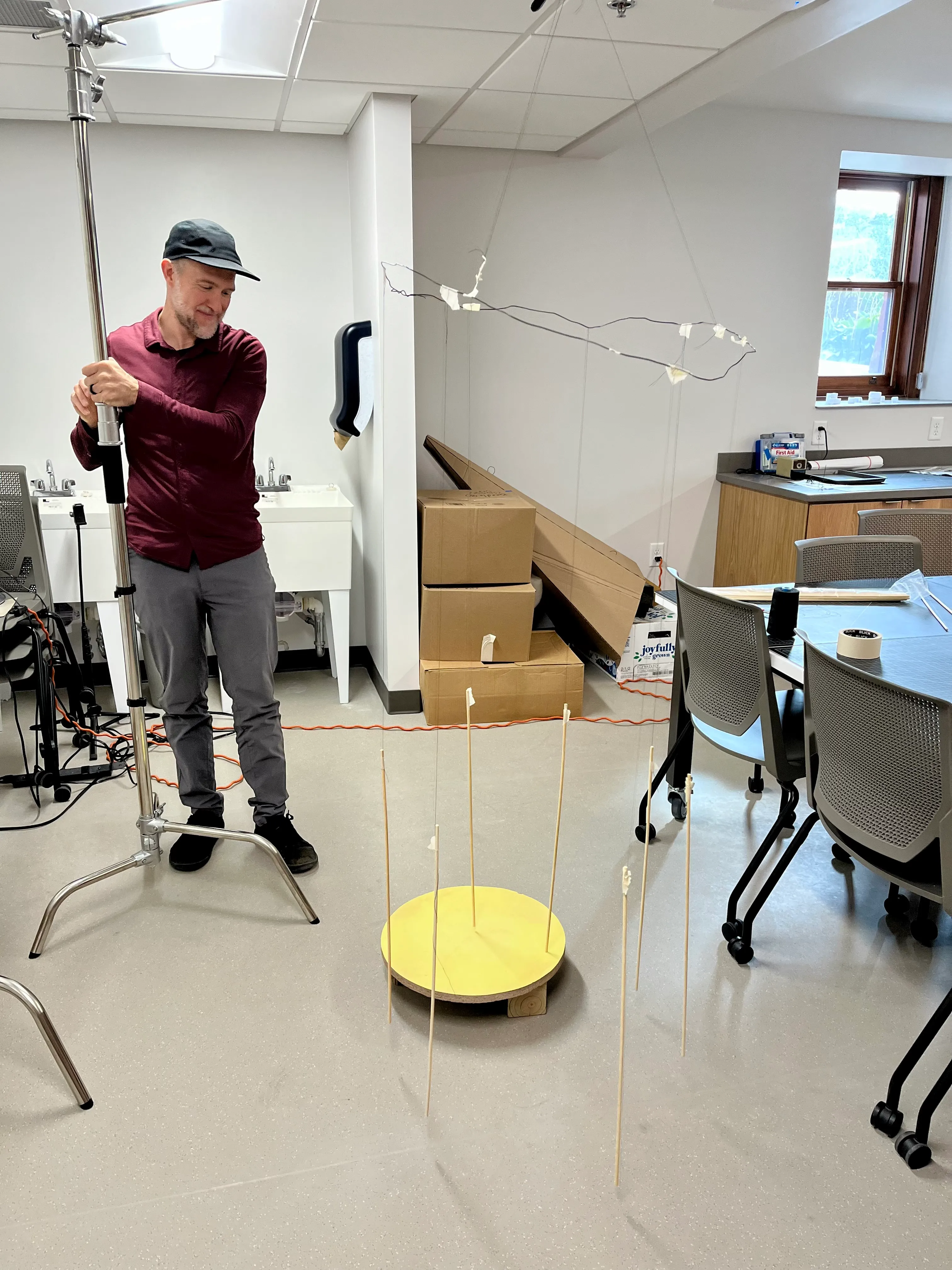
Prototype disc fitted with vertical wooden dowels during an early studio sound and form experiment
Early Experimentation Tim with a prototype disc fitted with vertical wooden dowels.
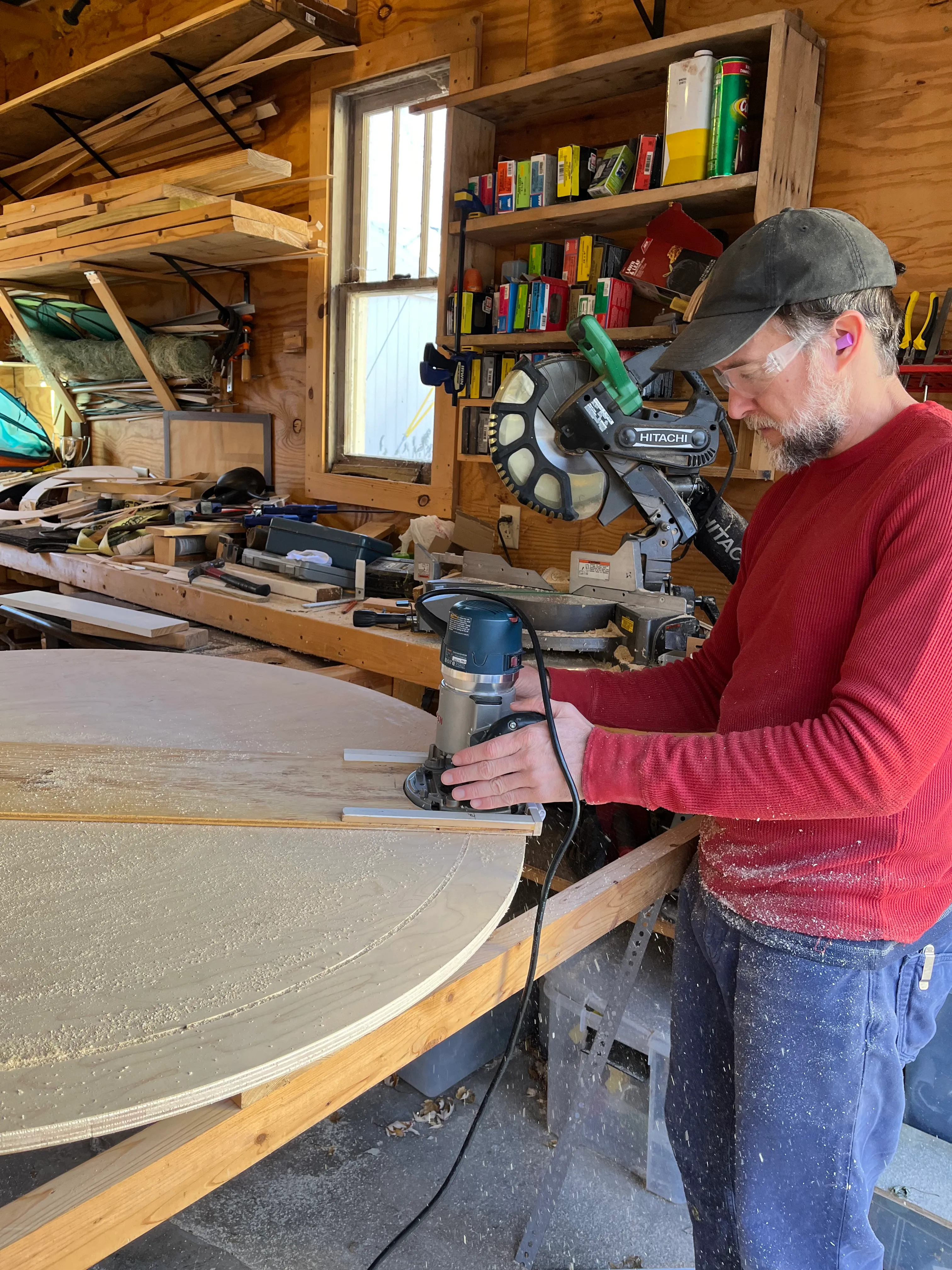
Large plywood rings being routed in the workshop
Cutting the Rings Large circular rings take shape from plywood.
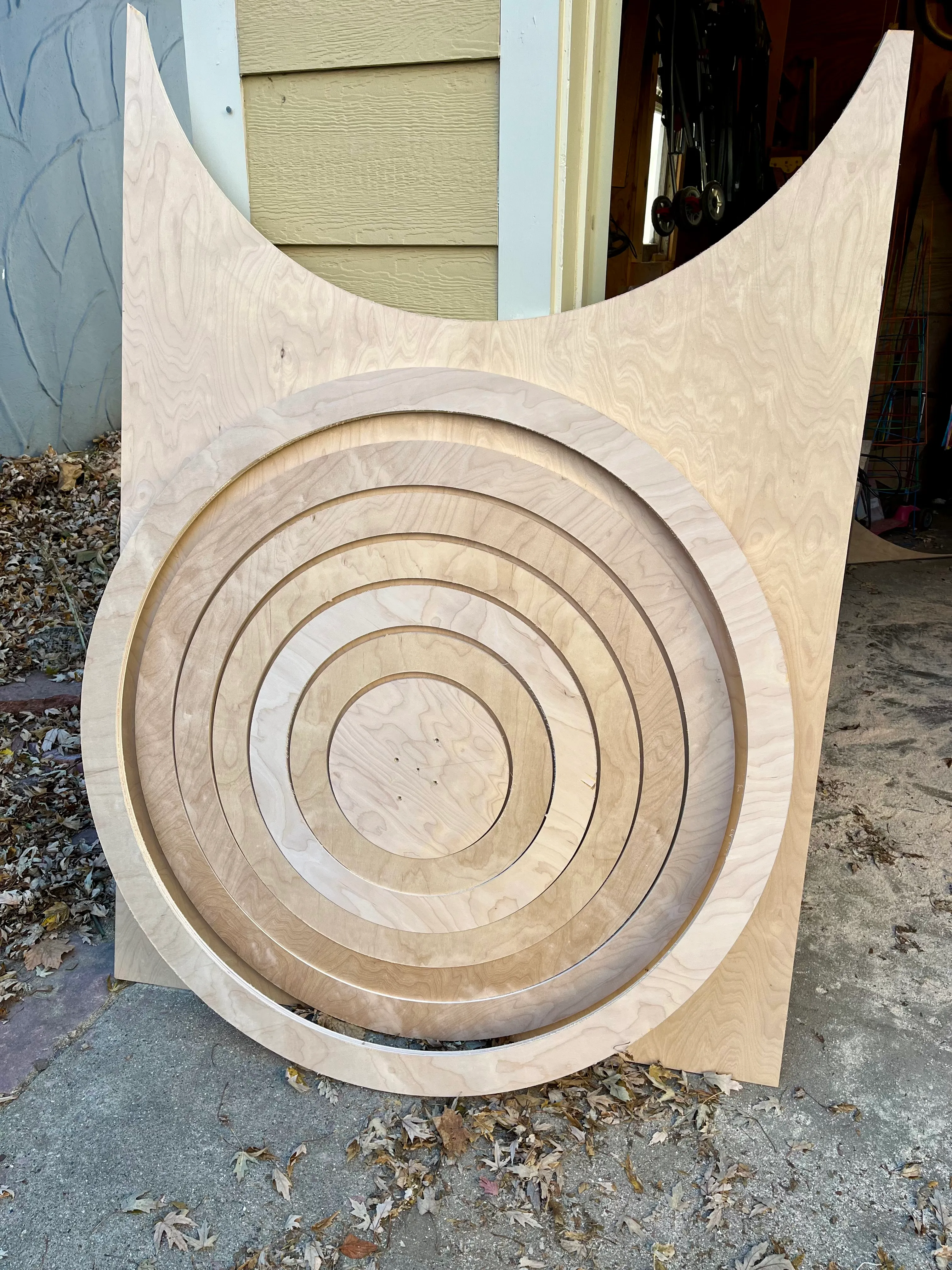
Freshly cut concentric plywood rings nested within the original sheet
The Rings The freshly cut rings, still nested within the plywood sheet from which they were routed.
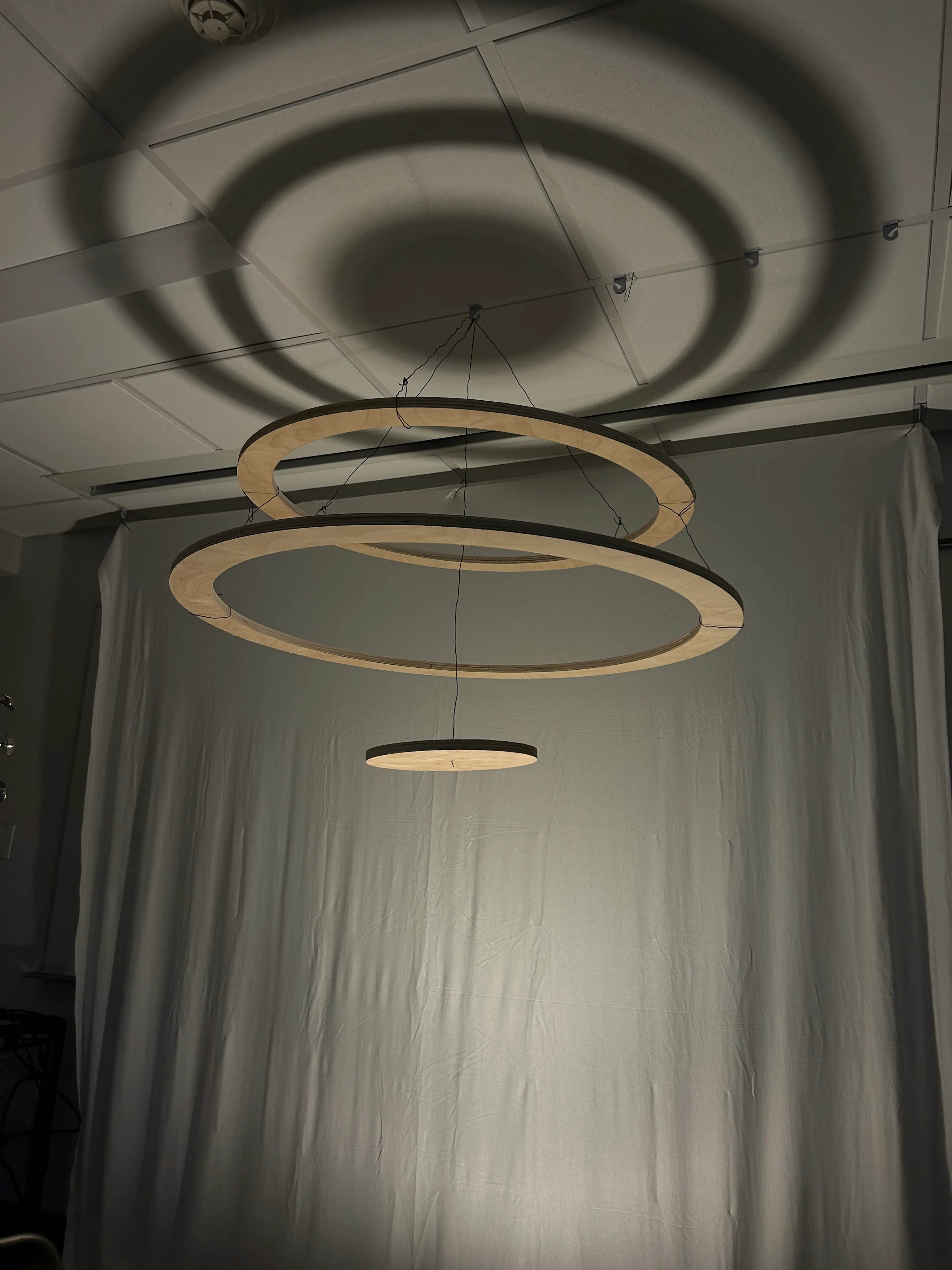
Suspended wooden rings casting concentric shadows during an early lighting test
Rings in Space An early suspension test: wooden rings hung from wires in a darkened space, casting shadows on the wall behind them.
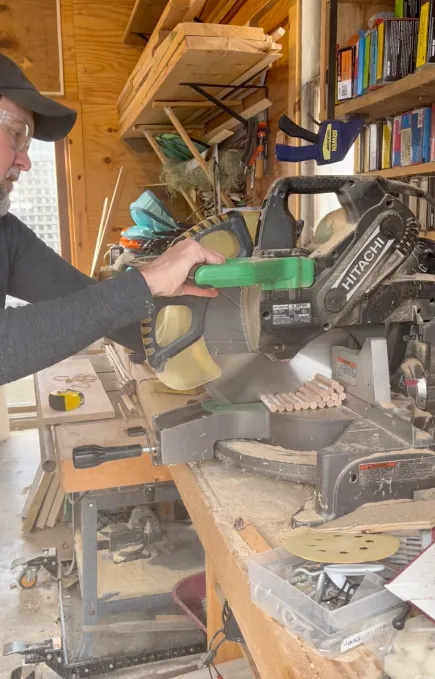
Wooden dowels being cut to size for the hanging interior structure
Cutting the Legs Wooden dowels cut to length. These hang vertically inside the finished sculpture.
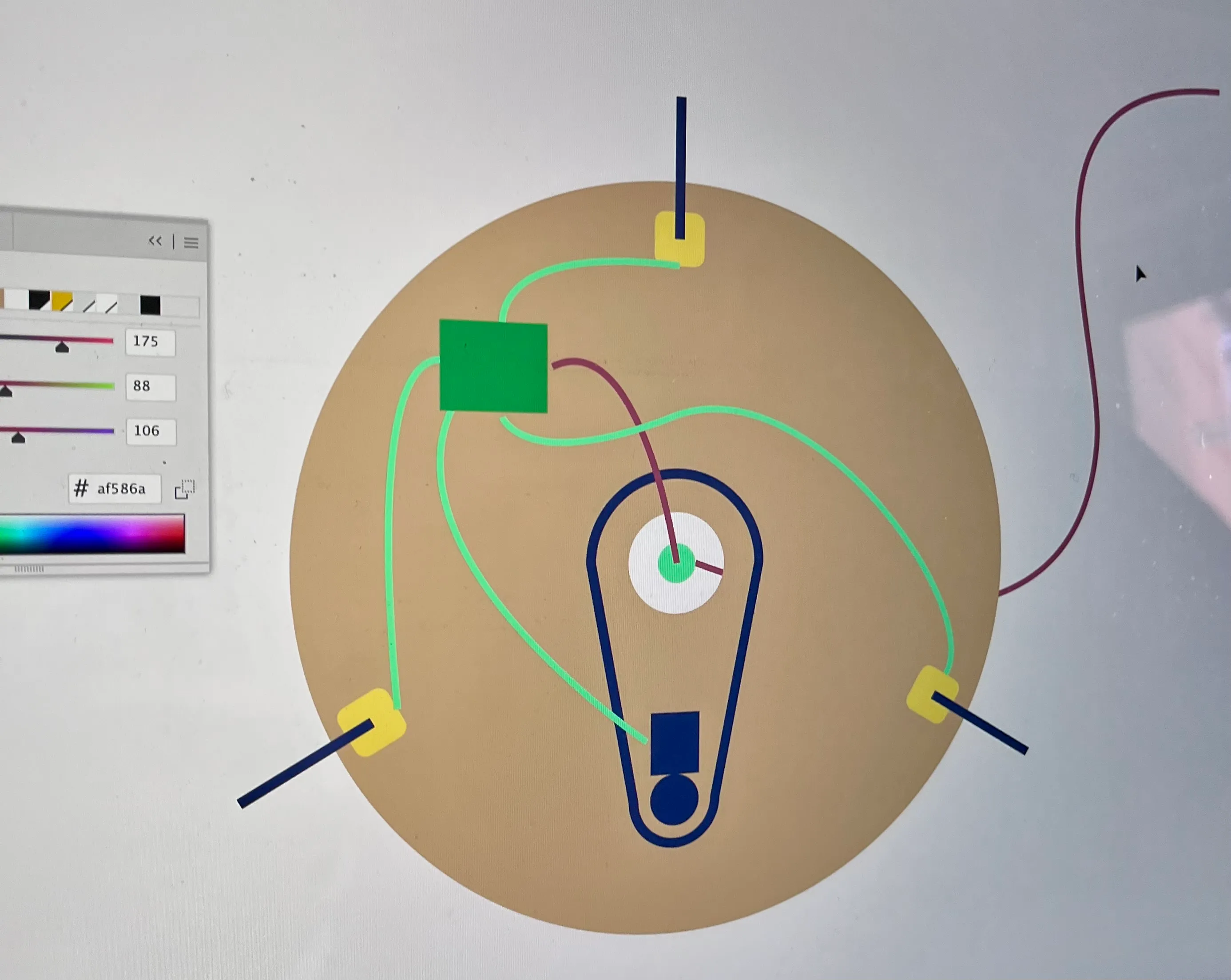
Digital overhead schematic of the base motor and belt-drive system
Diagramming the Rotation Tim's schematic for the motor and belt-drive system, working out servo placement and pulley routing.
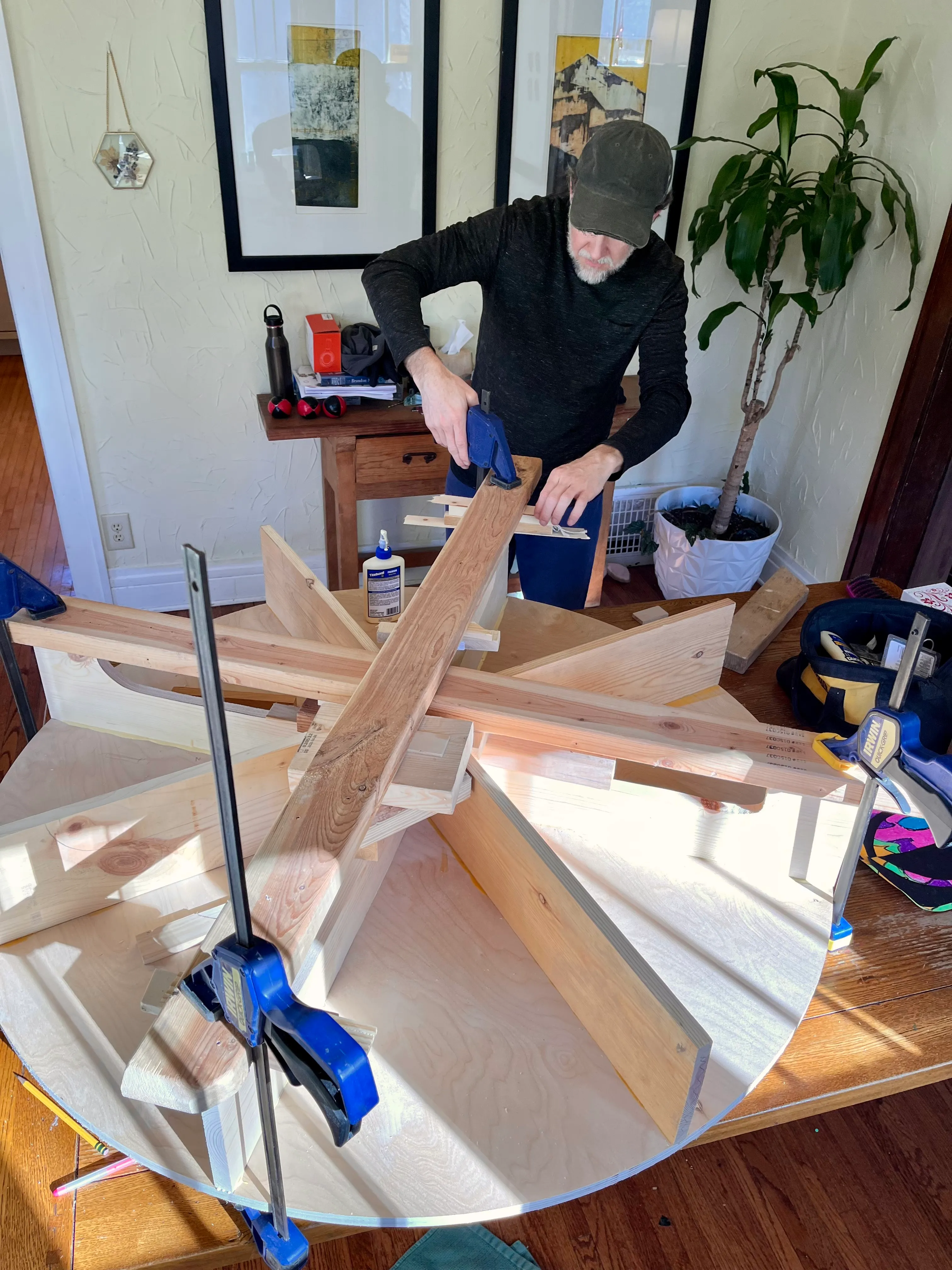
Large circular base framework being glued and clamped together
Building the Base The radial rib framework of the base, glued and clamped together.
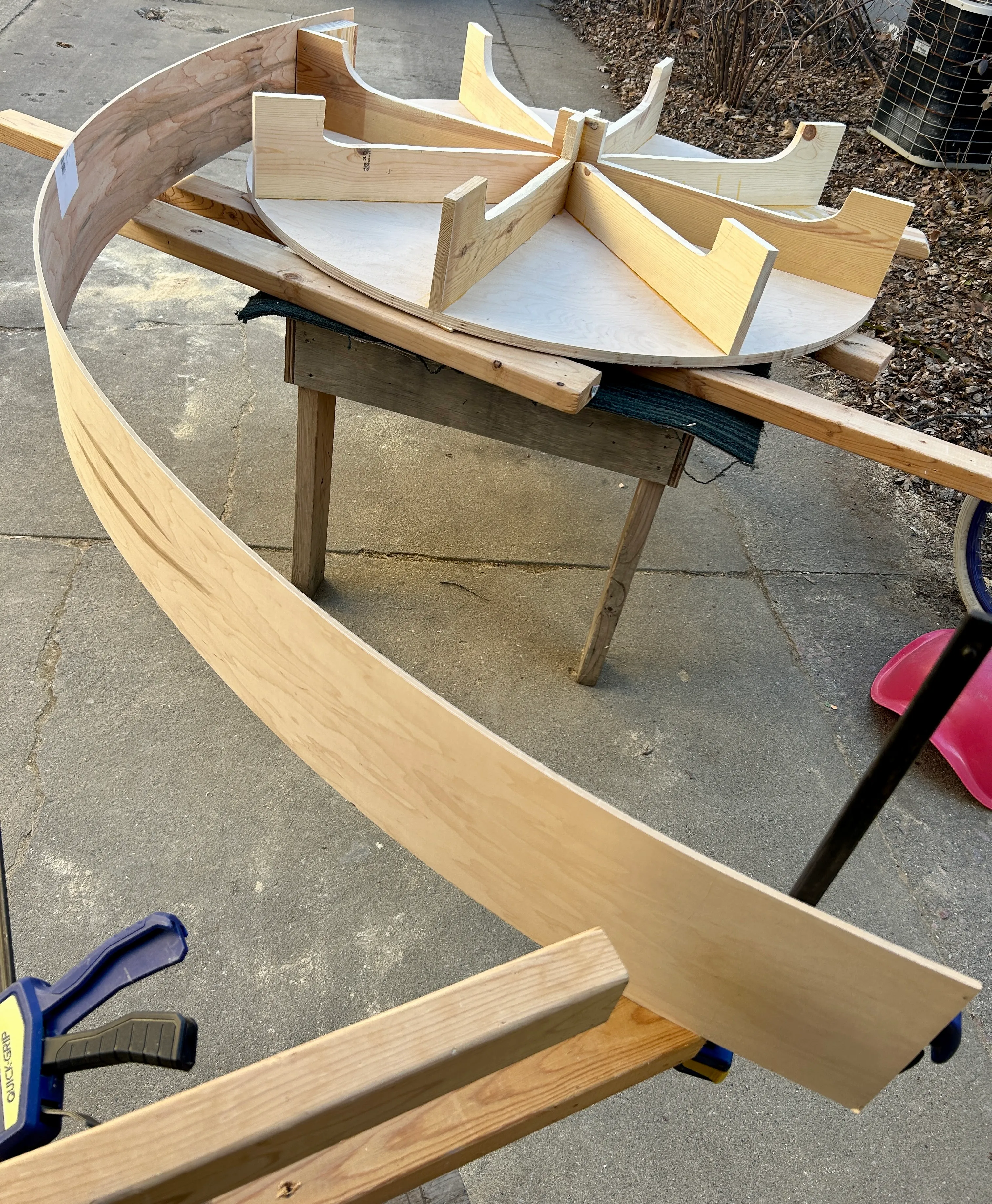
Curved plywood exterior band beside the assembled base framework
The Bent Skirt The curved exterior band — a strip of plywood bent into a full circle — sits beside the assembled rib framework.
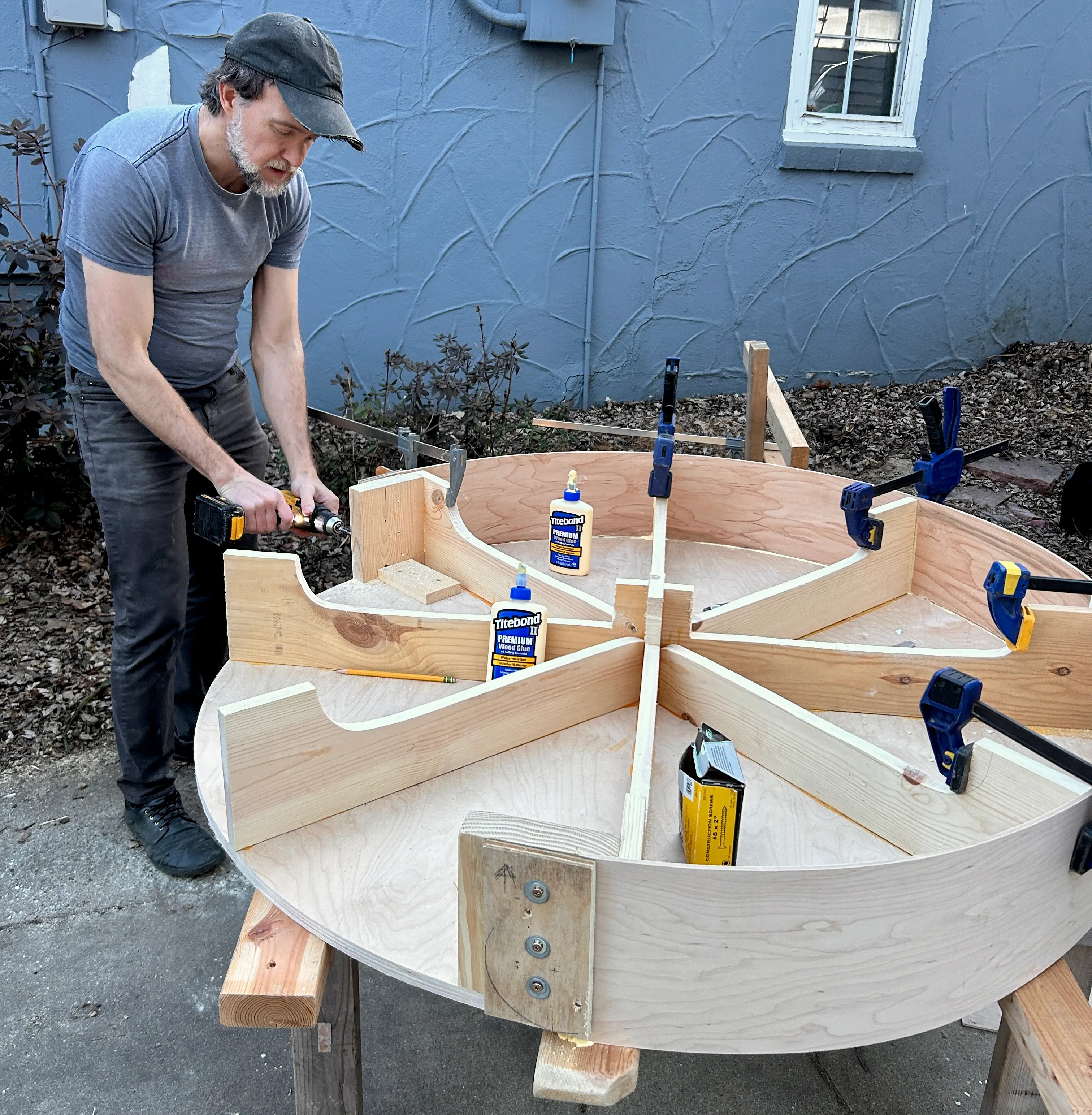
Fasteners being drilled into the assembled circular base while clamps remain in place
Securing the Base Tim drills fasteners into the assembled base, with glue and bar clamps still in place. The structure is nearly five feet in diameter.
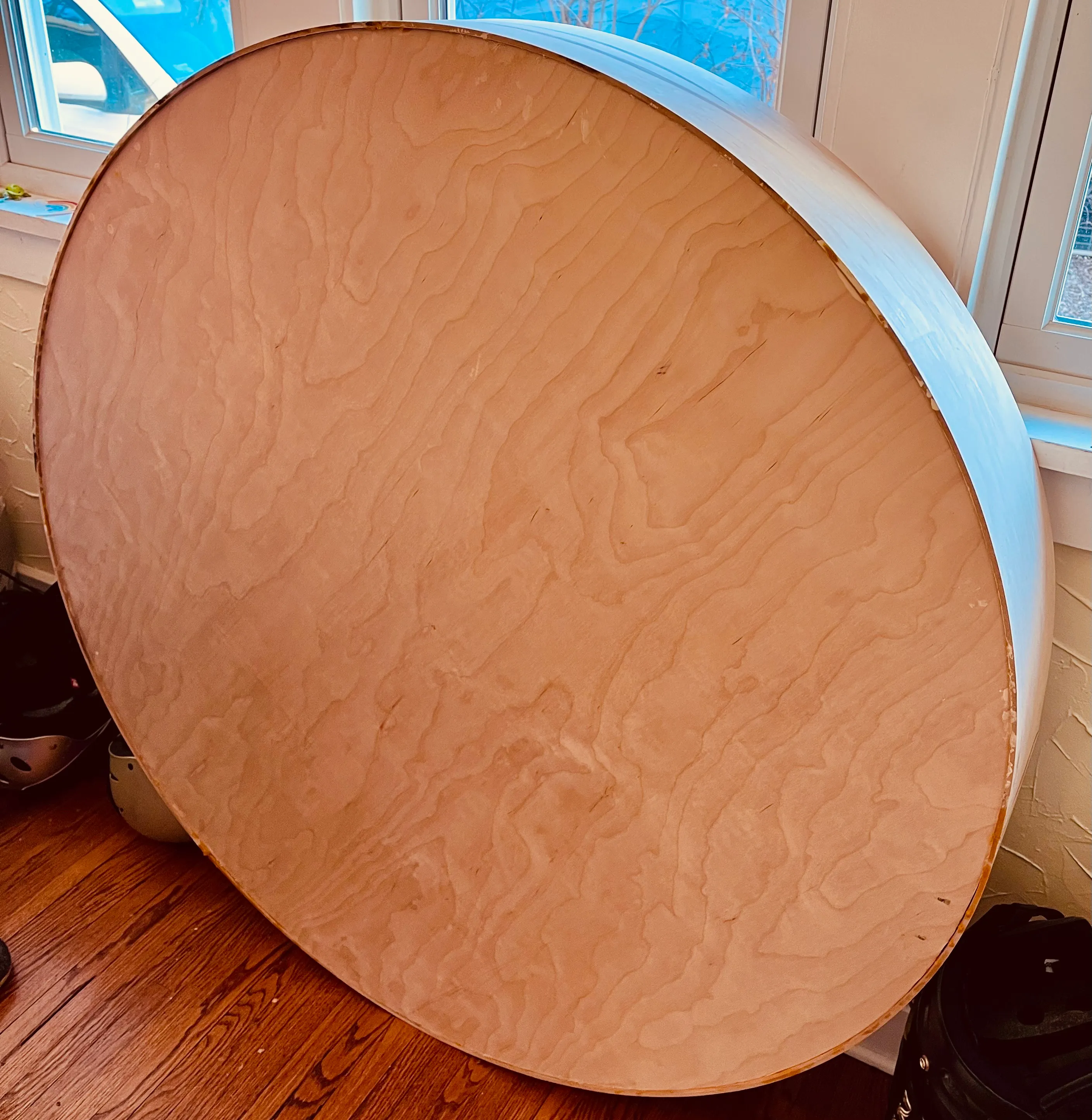
Finished circular plywood base.
The Base Complete The finished base.
Servo motors, brackets, wiring, and a wooden bearing housing laid out for assembly
Electronics and Motion Tate lays out the servo motors, brackets, and control wiring for Drift's rotation mechanism.
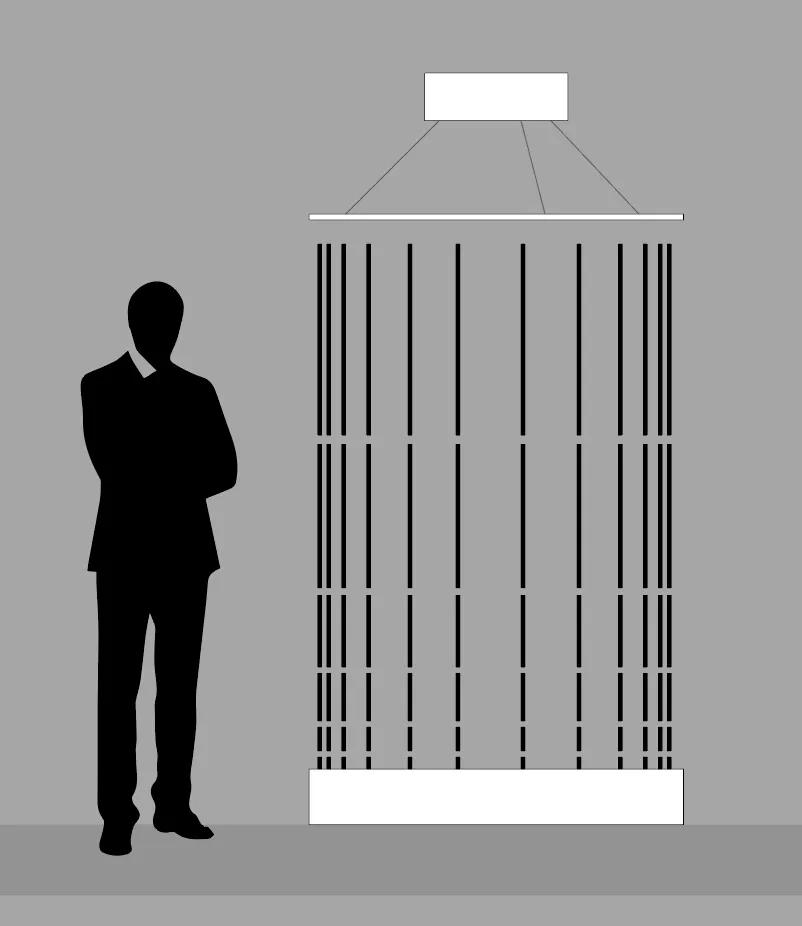
Scale study rendering showing the installation footprint relative to a standing viewer
Full Installation Design Tim's scale study for the Drift installation.
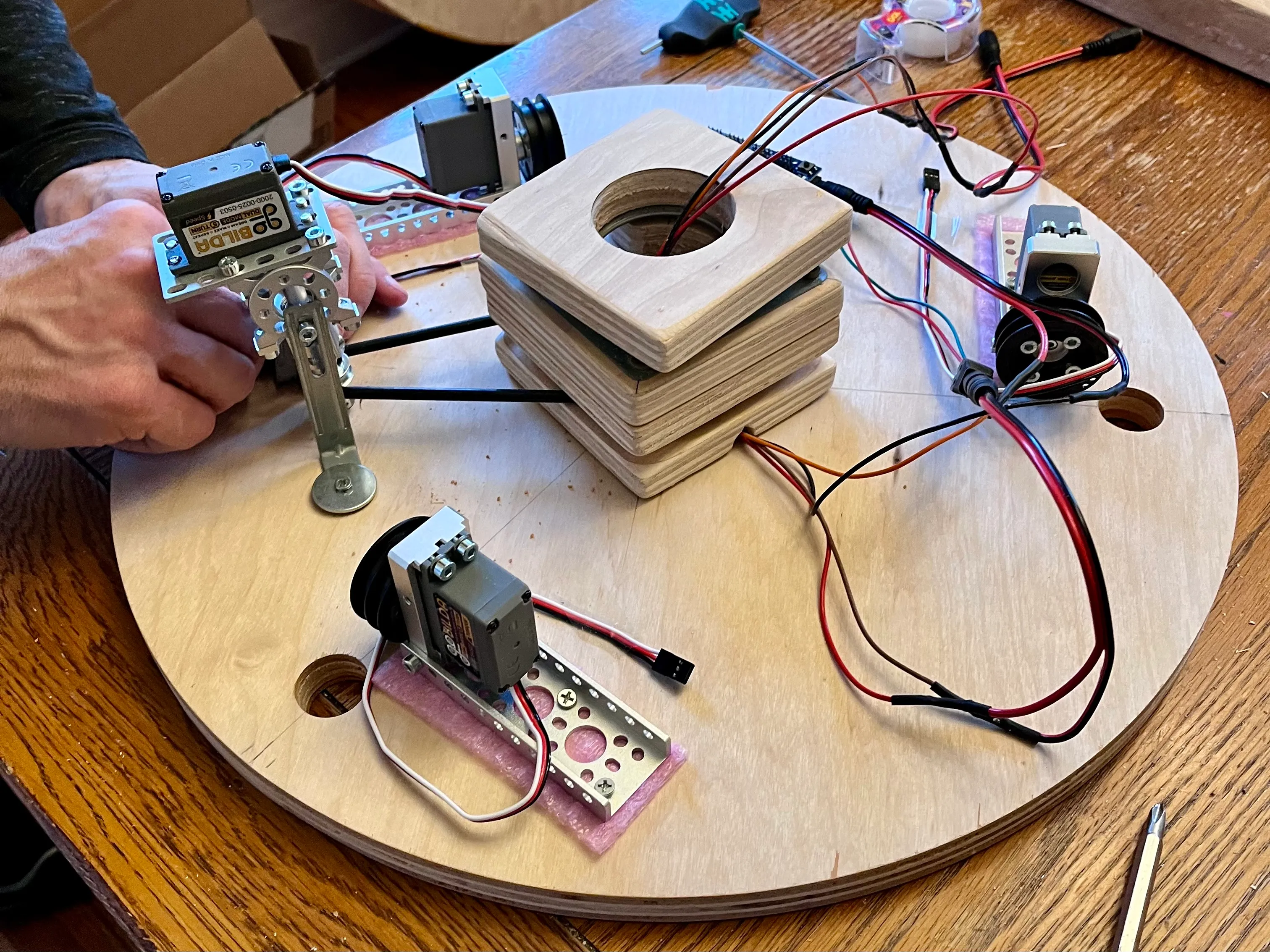
Close-up of hands assembling goBILDA servo motors, brackets, and an Arduino on the circular plywood base
Hanging the 'Brain' Tate hangs the 'brain' of the installation which drives the rotation of the suspended rings above. The 'brain' consists of servo motors, brackets, and an Arduino control board.
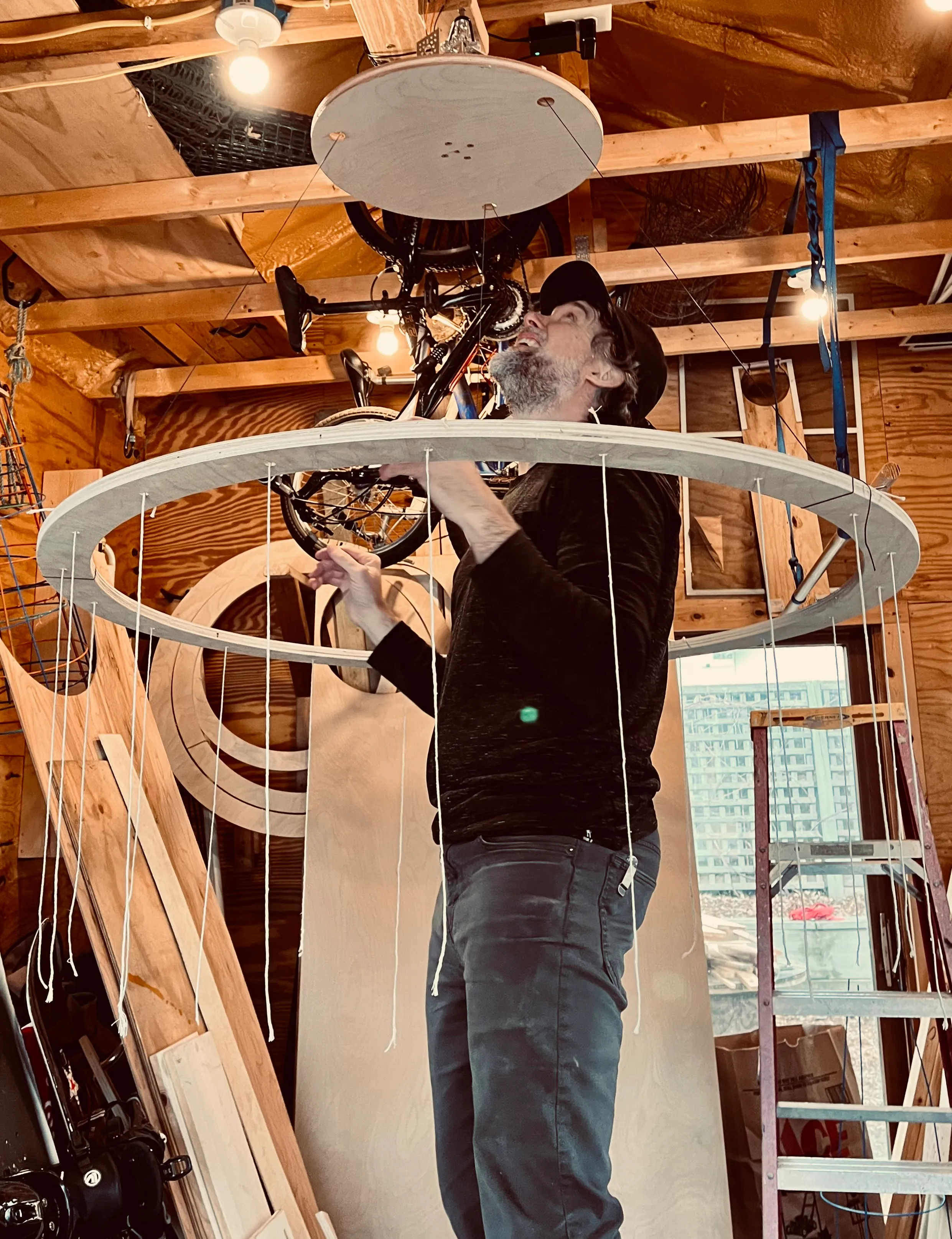
Tim standing beneath the suspended ring, attaching hanging strings to the structure
Attaching the Strings Hanging strings attached to the suspended ring from below.
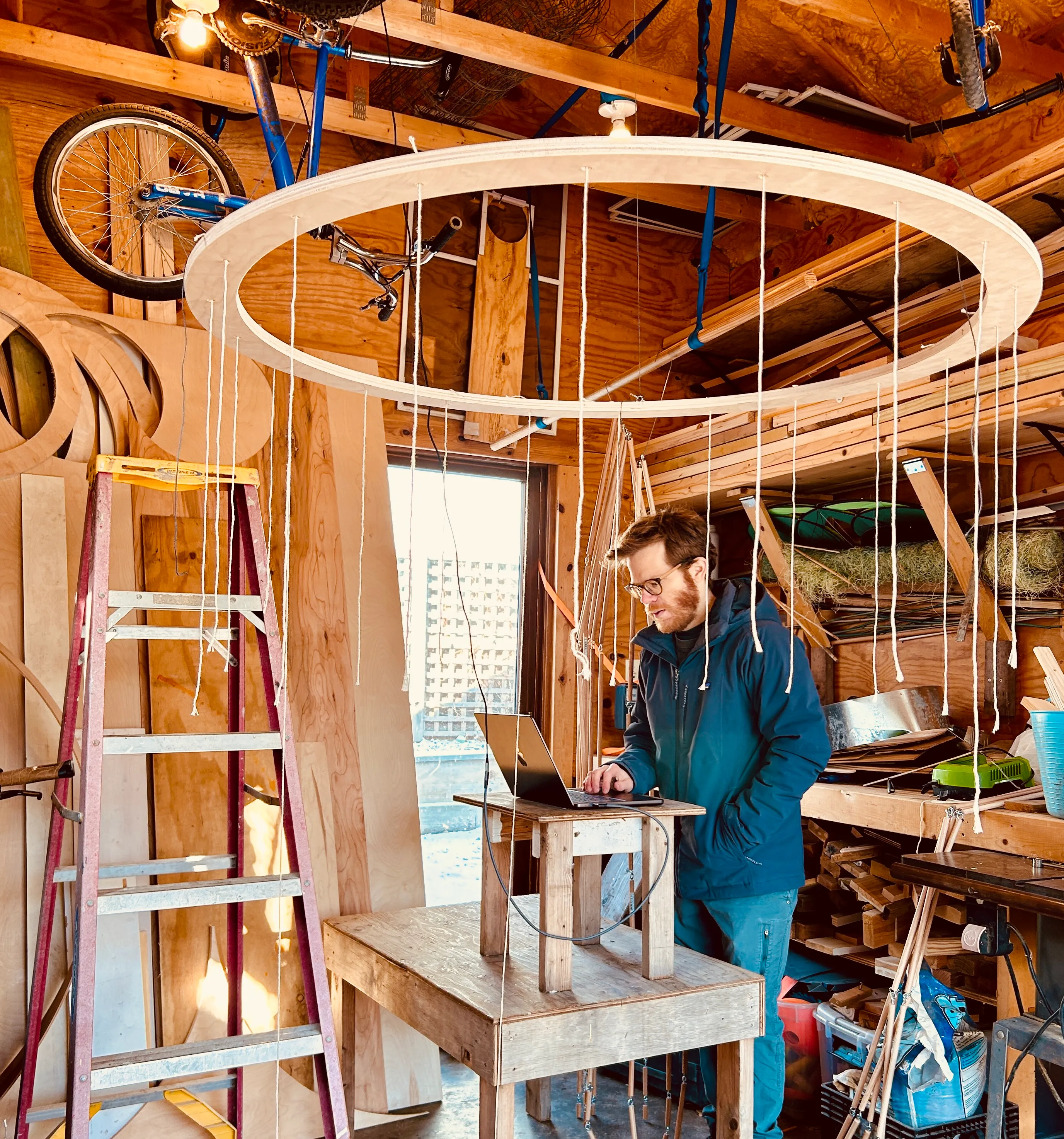
Tate programming at a laptop beneath the suspended ring with hanging strings
Programming the Movement Tate programs Drift's rotational behavior from a laptop in the workshop.
Theoretical Basis

How noise, sound, and listening shape daily life.

Technologies like white noise machines modify perception and reshape mood and attention. These are what Hagood calls orphic media. From Buckwalter's first white noise machine to Irv Teibel's Environments records to Bose's noise-cancelling headphones, people have spent decades engineering their own silence. Drift transforms that impulse into sculpture by making the pursuit of sonic control physical and immediate. And by scaling the work beyond what can be experienced all at once, the installation creates a space audiences inhabit rather than observe.

Scale as confrontation

Drift redesigns the white noise machine many times larger than its commercial counterpart, making it impractical for its intended purpose — masking unwanted sound in a living environment. You confront the noise you'd usually ignore.

What silence reveals

Tinnitus is sometimes described as the brain's response to silence — our attention straining to find meaning in the quiet. Many tinnitus sufferers use white noise machines to mask the ringing. The brain fills silence with noise; we cover that noise with more noise. Drift makes that loop audible.

Noise as creative material

The sculptures position noise not as something to mask or eliminate, but as creative material. Rather than mask or eliminate noise, the sculptures shape it.

What's Next

Four sculptures

Currently, Drift consists of a single kinetic sculpture. Next, the installation will expand to four progressively smaller but identical sculptures — surrounding the listener in white noise and creating an environment they can move through.

We spend our lives controlling what we hear through masking and curating. Drift asks what happens when we stop managing the soundscape and start listening to it.